Rioja´s 2026 vintage to leave 30 million litre wine glut.
Rioja is set to produce 30m litres of excess wine this year, says union boss, despite strident efforts to cut oversupply in the Spanish region.

It’s no secret that Rioja has been battling an oversupply of wine for some years now. Last year, the region was considering pulling out 7,000-9,000 hectares of vines (11-14% of the total area of almost 66,000ha of productive vines in Rioja) to bring down the future supply of grapes as consumer demand dipped.
“We are on the right path, but it is not enough,” José Luis Lapuente, general manager of the Consejo Regulador de la DOCa Rioja, told the drinks business in 2025.
Despite the DOCa’s efforts, according to Eduardo Pérez Hoces, president of the Rioja Association of Farmers and Livestock Breeders (ARAG), the region is expected to produce around 30 million litres of excess wine this year, leaving it in a precarious position.
“We’re going to have almost 250m litres of wine, with sales of only 220m,” Pérez Hoces told Spanish newspaper La Rioja this week. “That means we’ll have almost 30m litres of excess supply, which will put downward pressure on prices again, even though it hasn’t been a particularly productive year.”
Preventative measures
 Although drones were used to observe individual vineyards, and AI employed to predict production levels, Rioja’s 2026 harvest will still exceed the amount of wine the region is able to sell.
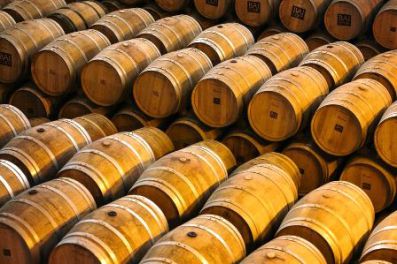
Compounding the situation is the fact that little 2026 wine is able to be released immediately, with much of it bound by the region’s strict ageing classifications – Crianza, Reserva, Gran Reserva etc. – which require years spent in barrel and bottle.
All this comes at a cost.
ARAG previously claimed that Rioja winegrowers have lost an estimated €38,227 per 10-hectare vineyard over the past six harvests. According to the organisation’s own calculations, ARAG said that while average production costs for grapes in DOCa Rioja climbed to €0.864/kg between 2020 and 2025, the average price paid to growers for their crop was €0.722/kg. This represents an average shortfall of €0.142/kg, which ARAG said amounts to 16.5% of production costs. The group said it represented a shortfall of 14.3 euro cents per kilogram of grapes.
“We’ve done our part”
 Speaking about the region’s battle to cut Rioja’s oversupply, Pérez Hoces said back in August that growers have been repeatedly asked to “produce less, select more carefully, meet tighter quality standards, comply with more rules, and absorb higher costs” than they faced a few years ago.
He said that growers had done their part, but that grape prices had not kept pace. Consequently, many are moving away from winegrowing towards growing other crops.
The region’s 2026 wine harvest began unusually early in mid-August (with white and early-ripening grapes starting around 15–18 August) caused by warm spring and hot summer temperatures pushing budburst and ripening ahead of schedule. A lack of late frosts or hailstorms meant that natural vine vigour, and therefore yield, remained high, with 2026 giving significantly higher volumes than in 2025.
The Rioja harvest was officially declared closed on 22 September.
Information from The Drinks Business